A finished bathroom can still hide water problems
A bathroom can look beautiful and still have water problems behind the tile. The visible finish is only one part of the system.
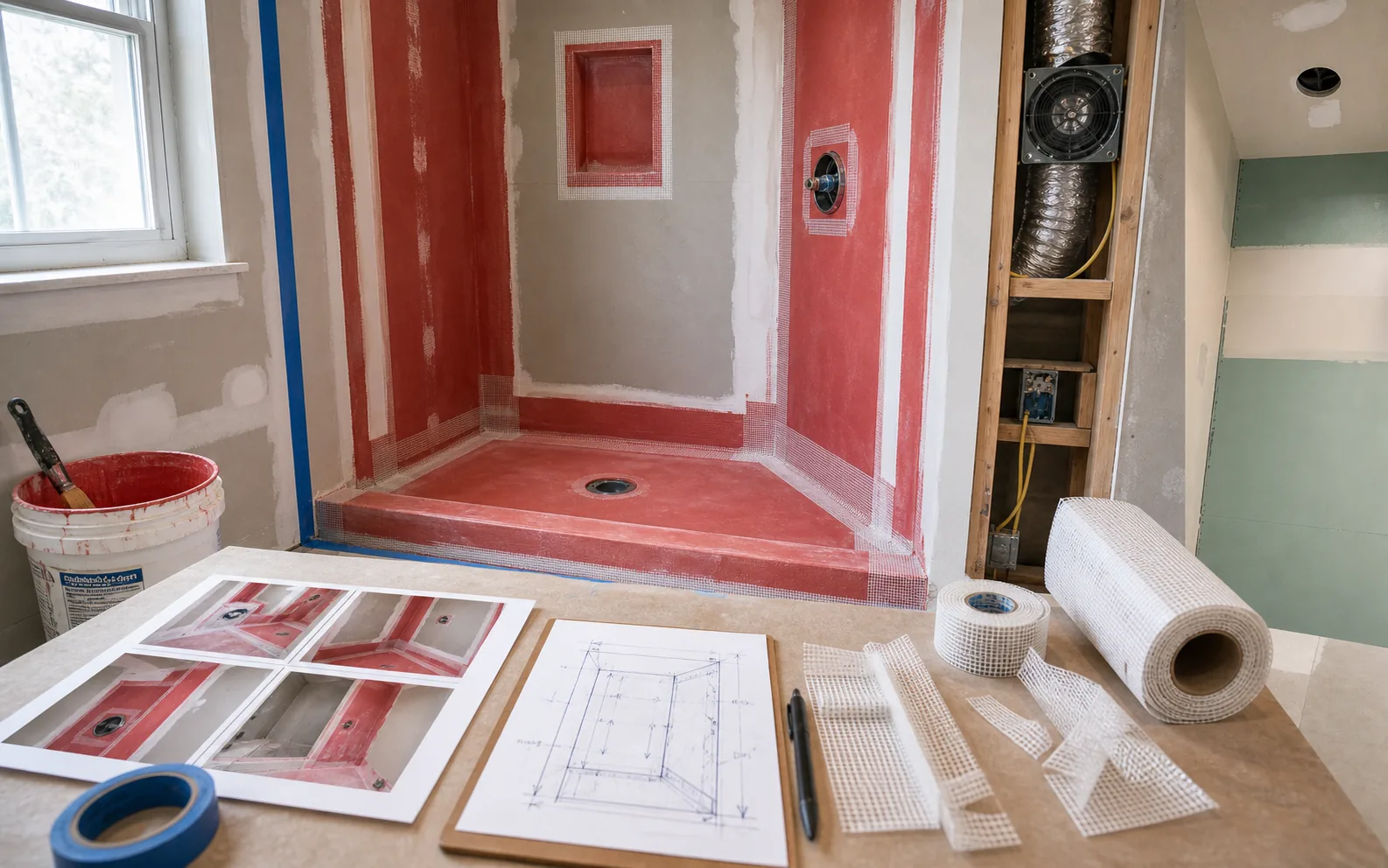
In a shower, water management depends on the substrate, waterproofing method, drain connection, slope, corners, penetrations, curbs, niches, benches, sealant joints, and ventilation. Those details should be discussed before tile starts, not after the bathroom is already finished.
What homeowners should ask before tile starts
Before tile covers the system, ask the contractor clear waterproofing and moisture-control questions.
What waterproofing system will be used?
The answer should name the product family or method, not just say the shower will be waterproof.
Is the waterproofing behind the tile or directly under the tile?
Different systems work differently, and the scope should describe the chosen approach.
How are corners and seams sealed?
Corners and seams are common failure points.
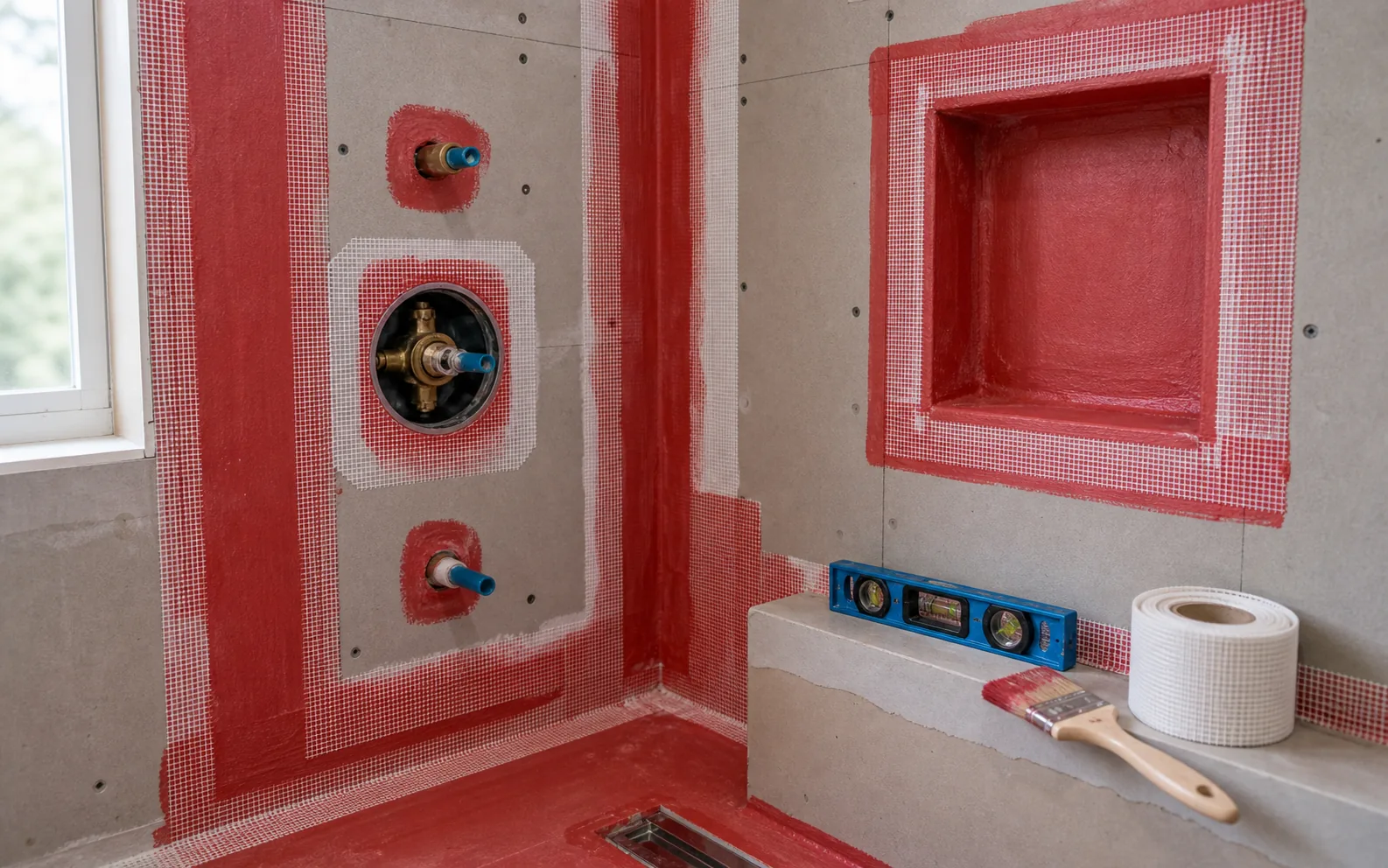
How are valve openings, shower heads, niches, benches, and curb penetrations handled?
Penetrations create openings in the water-management system.
How does the drain connect to the waterproofing system?
Water should leave through the drain system, not around it.
Will the shower pan be tested before tile?
Testing before tile makes problems easier to find and fix.
What areas need slope so water does not sit?
Floors, benches, shelves, and niches need water to move toward the drain.
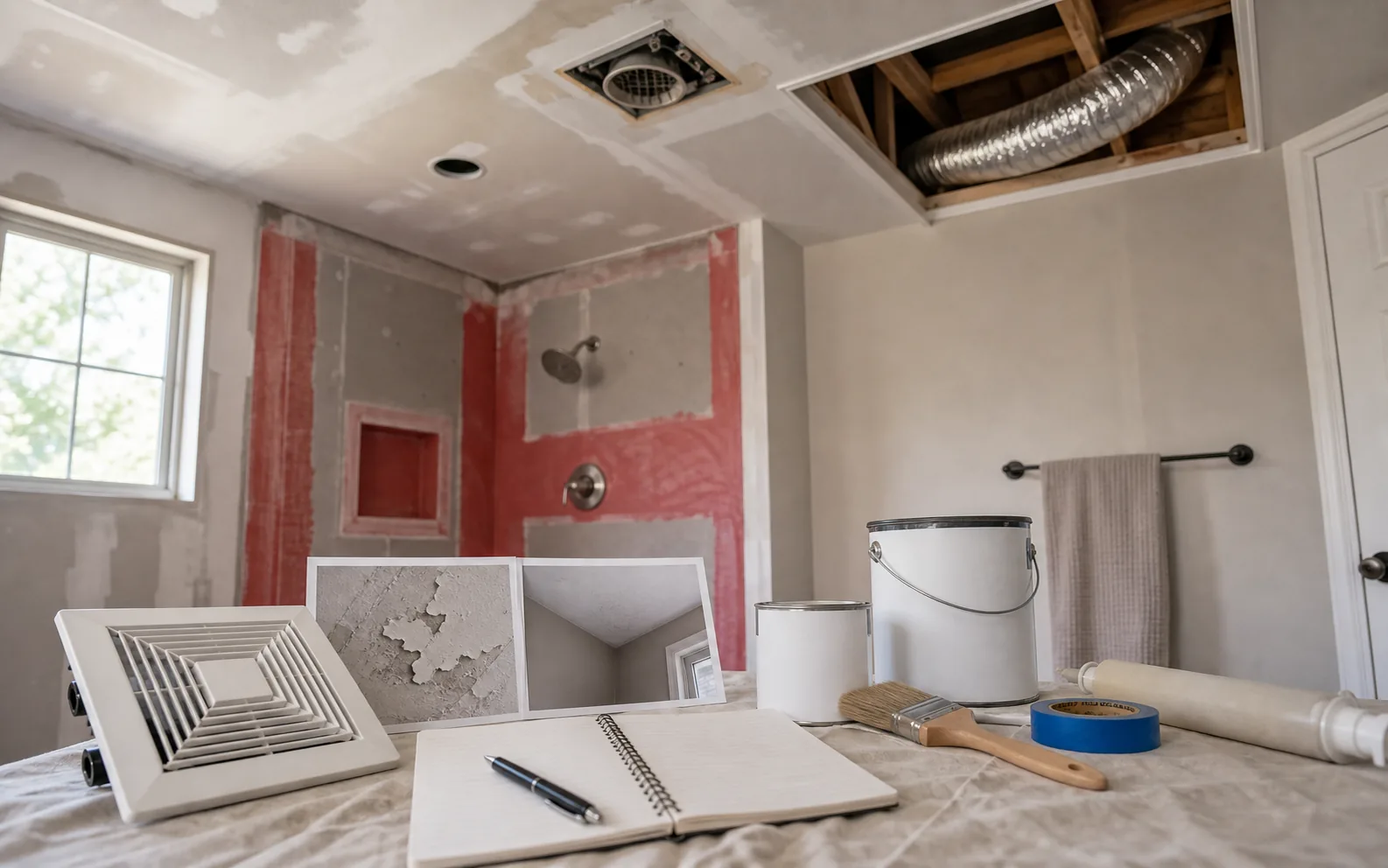
How will the bathroom be ventilated?
Moisture control protects paint, trim, cabinets, grout, and drywall.
What needs to dry or cure before the next step?
Wet materials need time before they are covered.
What happens if demolition reveals damage?
The hidden-condition process should be clear before walls are opened.
Common shower weak points
| Area | Why it matters | What to ask |
|---|---|---|
| Drain | Water has to leave through the waterproofing system, not around it | How is the drain tied into the system? |
| Curb | Curbs get wet and are often penetrated by glass hardware | How is the curb waterproofed and protected from fasteners? |
| Corners | Corners move and collect water | How are inside and outside corners sealed? |
| Niches | Niches have several small seams and flat surfaces | Is the niche sloped and fully waterproofed? |
| Bench | Benches hold water if not sloped correctly | Is the bench sloped and tied into the wall waterproofing? |
| Valve wall | Plumbing penetrations create openings in the system | How are valve and pipe penetrations sealed? |
| Ceiling and fan | Moisture can damage paint and drywall | Is the fan working and vented outdoors? |
Ventilation is part of bathroom durability
A bathroom fan should not just make noise. It should move moist air outdoors through a planned duct route. If the fan is weak, disconnected, vented into an attic, or rarely used, moisture can shorten the life of paint, trim, cabinets, and grout.
Building America/PNNL guidance says bathroom and kitchen exhaust fans should vent outside rather than into an attic or crawlspace. It also points toward short, direct duct routes with fewer bends so airflow is not lost before moisture leaves the house.
Blocking and future attachments should be planned early
Grab bars, glass panels, niches, benches, towel bars, and heavy accessories may need framing support. It is easier to add blocking while the walls are open than after waterproofing and tile are finished.
Glass hardware, towel bars, shower doors, and accessories should not be afterthoughts. The scope should explain how attachments will be supported without damaging the waterproofing system.
Related next steps
Checklist
- Waterproofing system
- Drain location
- Curb or curbless plan
- Niche placement
- Glass attachment points
- Fan capacity
- Accessory blocking
- Tile layout
Related project
Primary Bath Shower Conversion
See how waterproofing, layout, ventilation, and finish planning come together in bathroom work.